Posts

Wine Winter

Image
Blackberry pictures are rough, especially when using the flash. Making such a short trip up to the Shier, I forgot the good camera. The wine continues to dry and is now starting to clear. It has a pleasant bouquet, but I will wait until next time to taste. A not-so-bad picture taken on my Blackberry. View of Newburgh from Beacon.

Racking in the New Year

I racked the wine off the sediment on Sunday morning. Many of the oak chips had settled to the bottom of the carboys. There were small crystals on the chips, which looked somewhat like the precipitate of tartaric acid. It was surprising because the carboys were not subjected to freezing temperatures . The temperature on the basement floor was about 51-52F, after slowly dropping from around 57F at the time the wine was placed in the carboys in November. It seems more likely that it could be the precipitate of the potassium bicarbonate that was added to the juice at the vineyard. I will hold off on testing the acidity levels until the next racking about a month from now.

Oaking on New Year's Eve

Image
A little over a month into the secondary fermentation phase and the wine continues to dry down. The great reaction from last year's oaked Riesling bottles has encouraged me to add oak to two of the three carboys this year. I must say that I cannot even taste the oak from the chips, but I can recognize what seems to be an increased fullness in the wine. The faint bitterness from the oak perhaps adds an element that complements the sweetness and acidity of the wine and fills out the palate.

Going Four Weeks in the Winepod?

I checked on the Riesling this past Sunday, three weeks after start of fermentation. The Winepod read a Brix of 8 and my hydrometer read close to 9. Last year, the Riesling was close to zero after three weeks. The difference could be a tighter control on temperature, since I set the targets further apart this time to prevent overshoot by the heater and cooler. The temperature has been a near steady 62 degrees from the start, whereas it drifted briefly up to 65 last year. The difference could be a slight increase in available sugar, but this is unlikely, because the starting Brix was within a degree or two of last years' starting point. The difference could be a higher level of SO2. I did not measure the amount of SO2 added by the vineyard, but I have no reason to suspect a spike this year. The difference could be the potassium bicarbonate added to reduce a higher starting acid in the grapes or the difference could be the higher acid itself. Whatever the reason, I decid...

Cider and Riesling Year Two

Image
On October 23-24, Alicia and I made a trip back to the vineyard at Keuka Lake to pick up this year's Riesling grape juice. We brought Maya along, our little Cairn terrier. It was raining most of the trip. The Finger Lakes received much less sun in the summer of 2009 as compared to 2008. The result is a lower available sugar content in the grapes and ridiculously high acidity. Tom, the owner of the vineyard treated the juice with potassium bicarbonate to drop the acid a little. He measured a starting Brix of 19.4 and a total acidity of 1.036. I purchased five pounds of dextrose to make up the sugar shortfall. When I later measured starting Brix after loading my juice into the Winepod , I came up with 20.4 -- somewhat better. Perhaps Tom took his measurement before the entire crop was crushed. Adding the 5 pounds of dextrose gave me a theoretical fermentation starting Brix of 23, although I could not take an exact measurement at the time with the sugar still dissolving in the ta...

Fermented Dry In Two Weeks

Image
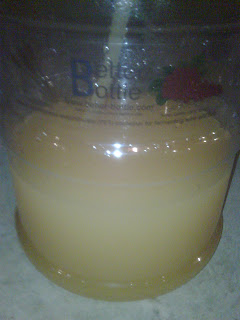
I apologize for the blurry picture from my Blackberry. After two weeks, the cider looks like orange juice. It may not be pretty at this point, but I was pleasantly surprised by the taste. I will let the yeast clear in the carboys before bottling. As an experiment, I added cinnamon to one carboy and Polyclar to another. The third carboy I left as is.

Hard Cider Rules

Image
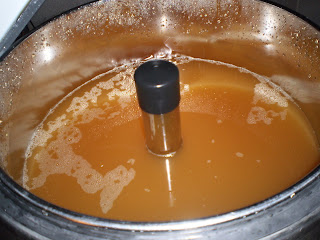
With fall in Ulster County, the apples are hard to miss. Alicia and I made a trip to Dressel Farms, a pick-your-own apple farm in New Paltz. I purchased 15 gallons of freshly pressed cider. After letting the cider warm to about 60 degrees, I loaded it into the WinePod. I set the temperature to 71 degrees and added yeast, yeast nutrient, acid blend, pectin enzyme, and potassium metabisulfate. If this works, I'll bottle the cider in 12 oz beer bottles. The Finger Lakes Riesling harvest is October 24. Hopefully the cider will be in carboys or bottles by that time.